Trust at Scale
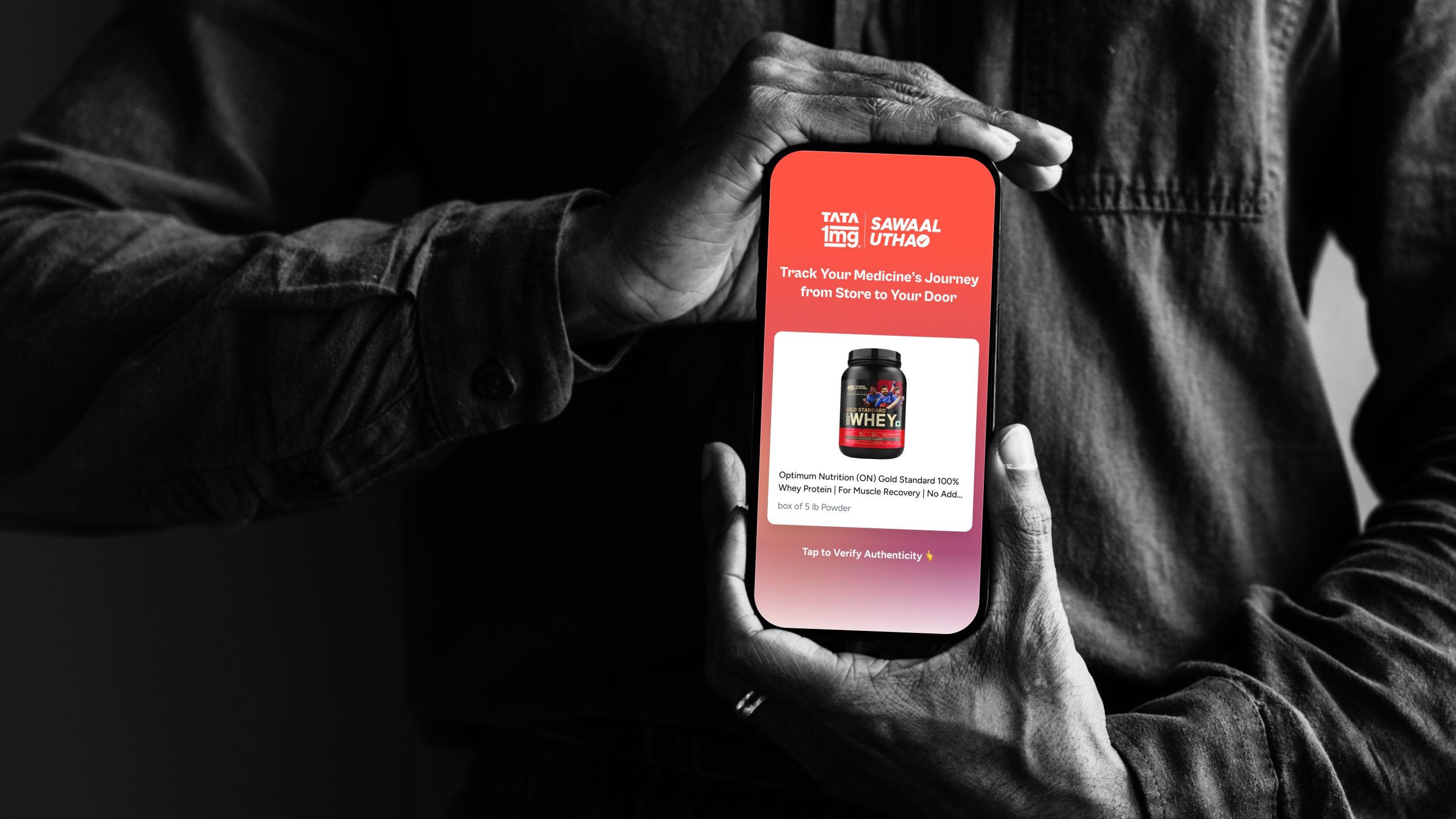
An initiative at Tata 1mg to build a healthcare experience rooted in authenticity, safety, and transparency—turning trust into a product feature in a market where 25–30% of medicines are estimated to be counterfeit.
Marketing
Trust and Authenticity
Project Overview
Designing a campaign that makes trust and authenticity core to the Tata 1mg experience—establishing it as the home of genuine, reliable healthcare.
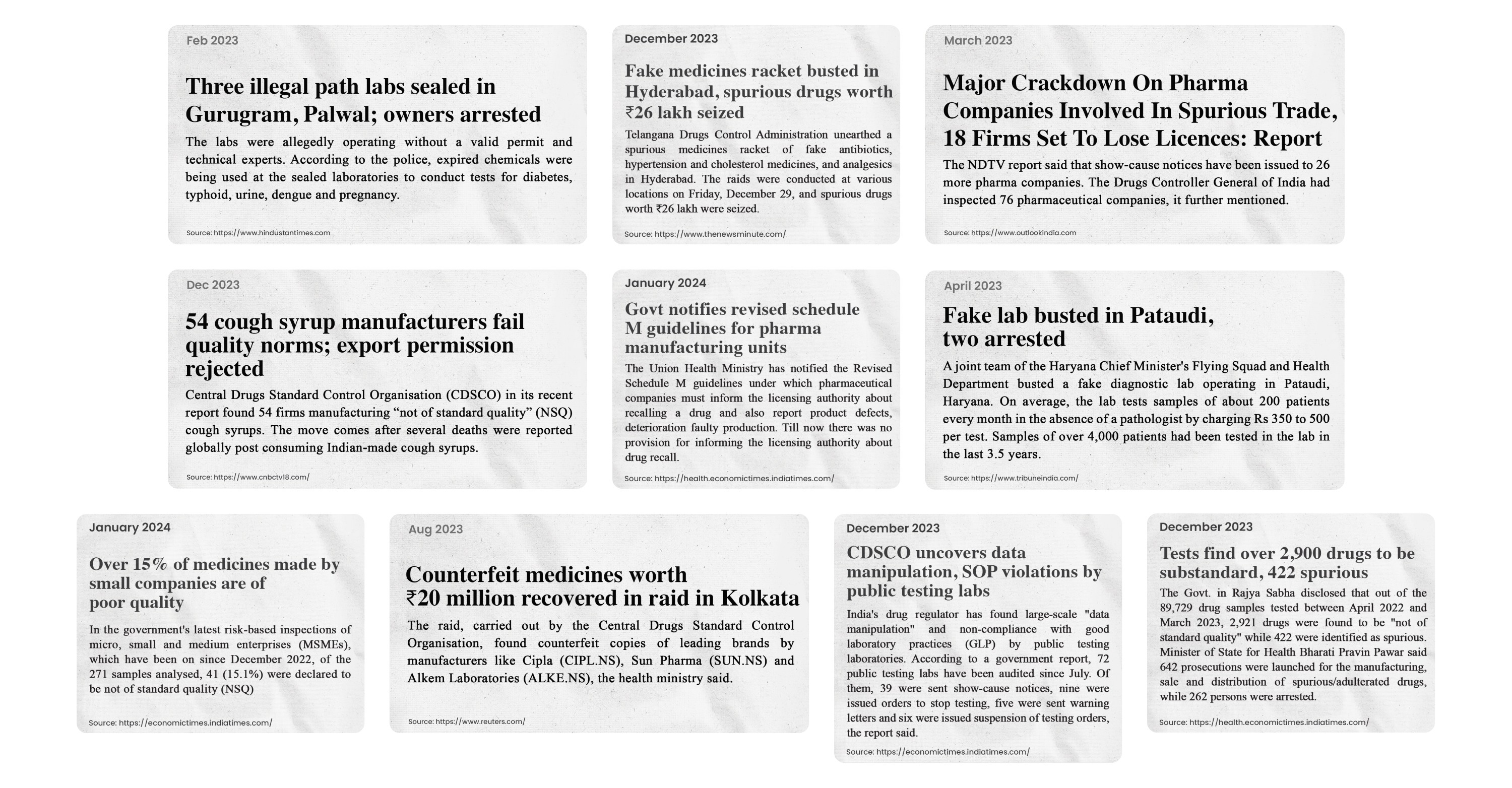
India faces a serious health crisis—counterfeit and substandard medicines continue to circulate widely, often indistinguishable to the average consumer. These fake products can lead to failed treatments, severe health complications, or even death. Despite the scale of the issue, awareness remains low and tools for verification are nearly nonexistent. In this environment, access to genuine, traceable healthcare is not just a user expectation—it’s a responsibility. The Trust Campaign directly addresses this gap by making product authenticity visible, verifiable, and actionable for every user.
Identified Problems
1. Low Awareness & Ineffective Communication
Most consumers don’t question medicine authenticity and receive limited, rushed information from pharmacists. This low awareness leaves them exposed to counterfeit or substandard products with serious health risks.
2. No Simple or Trusted Way to Verify Authenticity
Users currently have no quick, reliable flow to check a medicine’s batch, handling, temperature, or provenance. Without a clear verification system, even aware users cannot act with confidence.
3. Systemic & Economic Pressures That Enable Counterfeits
India’s fragmented supply chain, uneven regulation, and informal distribution create multiple entry points for poor-quality medicines. High prices and limited access further push consumers—especially in underserved areas—toward cheaper, dubious alternatives.
4. Distrust Within the Healthcare Ecosystem
Doctor-patient perception gaps (e.g., biases toward expensive brands) fuel cynicism and weaken trust across the system. Even when users know counterfeits exist, they rarely adopt verification as a routine behaviour due to friction and low perceived value.
Design Strategies Implemented
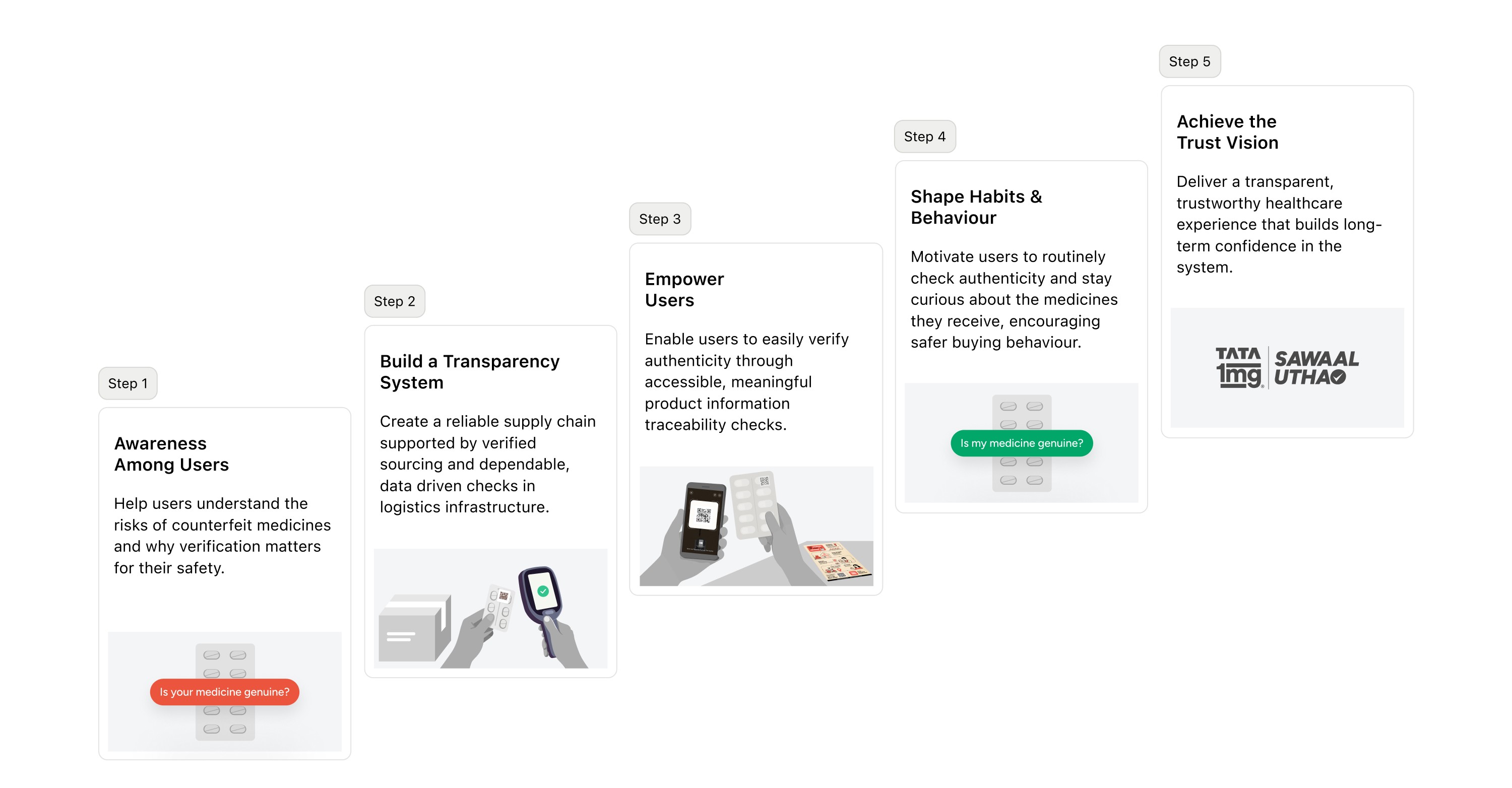
End-to-end transparency from warehouse to customer
Make authenticity visible and verifiable
At every stage of the customer journey (before, during, and after purchase)Turn awareness into behaviour
Make verification a natural habit by keeping it simple, fast, and reliable, so users build trust through repeated useBring supply-chain transparency into the UX
Translate backend traceability—batch data, temperature logs, handling history—into intuitive user-facing information that builds confidenceEmbed trust signals into the brand language
Strengthen credibility through consistent visuals, tone, and micro-interactions that reinforce Tata 1mg as the home of genuine medicinesEducate with empathy, not fear
Empower users with guidance and reassurance, helping them understand medicine safety without resorting to alarm or anxiety.
Phase 1
Awareness
Objective | Communication Strategy | Success Metrics |
|---|---|---|
Educate users about the prevalence and risks of counterfeit medicines by asking a simple, behaviour-shifting question: “Is your medicine genuine?” The goal was to make users aware that counterfeit medicines exist—and that authenticity matters. | Information backed by facts, statistics, and real stories on:
|
|
Phase 2
Scan your medicine
Objective | Communication Strategy | Success Metrics |
|---|---|---|
Empower users to actively verify the authenticity, provenance, and handling of their healthcare products—turning transparency into trust. | A dedicated microsite featuring unit-specific traceability, displaying:
|
|
Phase 3
Enhanced Traceability and Authenticity
Objective | Problem identified | What Phase 3 Solved | Success Indicators |
|---|---|---|---|
Make every product journey unique, verifiable, and personalised by introducing unit-level traceability that proves authenticity for each user. | User feedback highlighted that Phase 2’s journey felt generic and passive, limiting trust-building and leading to low revisit behavior. Users wanted deeper visibility and more personalised, meaningful proof of authenticity. | By surfacing granular, upfront details—from procurement to storage to delivery—at batch and unit level, we created a verification flow that felt specific, personal, and credible. |
|
Results
Metric / Insight | Details / Numbers |
|---|---|
Total Scanner Visits | 3,61,956 (Avg. daily: 9,049) |
Unique Users | 2,65,527 (Avg. daily: 6,638) |
Total SKUs Scanned | 48,762 (Avg. daily: 1,219) |
Successful SKUs Scanned | 24,114 (Avg. daily: 603) |
Unique SKUs Scanned | 8,142 (Avg. daily: 204) |
Scanner Funnel Conversion | 5.72% (Unique: 1.82%) |
Additional Visits via Trust Microsite | 14,342 |
Post-Delivery App Opens | 6,73,198 (63% of delivered orders) |
Scan Timing | 72% on Day 1; 82% within 3 days of delivery |
Top Cities Contribution | Delhi 9%, Gurgaon 8%, Bengaluru 7%, Kolkata 4%, Lucknow 4% |
Entry Point Performance | Homepage Bottomsheet: 33% visits, 0.68% conv. |
Overall Impact | Established a national benchmark for medicine authentication, high post-purchase engagement, and strong trust adoption |
More Works


FAQ
01
What makes your design process unique?
02
Have you worked on MVPs or 0-to-1 product journeys?
03
What is your design process like from research to handoff?
04
How do you handle tight deadlines or scope changes in a project?
05
How do you handle design critiques or conflicting feedback?
Trust at Scale
An initiative at Tata 1mg to build a healthcare experience rooted in authenticity, safety, and transparency—turning trust into a product feature in a market where 25–30% of medicines are estimated to be counterfeit.
Marketing
Trust and Authenticity
Project Overview
Designing a campaign that makes trust and authenticity core to the Tata 1mg experience—establishing it as the home of genuine, reliable healthcare.
India faces a serious health crisis—counterfeit and substandard medicines continue to circulate widely, often indistinguishable to the average consumer. These fake products can lead to failed treatments, severe health complications, or even death. Despite the scale of the issue, awareness remains low and tools for verification are nearly nonexistent. In this environment, access to genuine, traceable healthcare is not just a user expectation—it’s a responsibility. The Trust Campaign directly addresses this gap by making product authenticity visible, verifiable, and actionable for every user.
Identified Problems
1. Low Awareness & Ineffective Communication
Most consumers don’t question medicine authenticity and receive limited, rushed information from pharmacists. This low awareness leaves them exposed to counterfeit or substandard products with serious health risks.
2. No Simple or Trusted Way to Verify Authenticity
Users currently have no quick, reliable flow to check a medicine’s batch, handling, temperature, or provenance. Without a clear verification system, even aware users cannot act with confidence.
3. Systemic & Economic Pressures That Enable Counterfeits
India’s fragmented supply chain, uneven regulation, and informal distribution create multiple entry points for poor-quality medicines. High prices and limited access further push consumers—especially in underserved areas—toward cheaper, dubious alternatives.
4. Distrust Within the Healthcare Ecosystem
Doctor-patient perception gaps (e.g., biases toward expensive brands) fuel cynicism and weaken trust across the system. Even when users know counterfeits exist, they rarely adopt verification as a routine behaviour due to friction and low perceived value.
Design Strategies Implemented
End-to-end transparency from warehouse to customer
Make authenticity visible and verifiable
At every stage of the customer journey (before, during, and after purchase)Turn awareness into behaviour
Make verification a natural habit by keeping it simple, fast, and reliable, so users build trust through repeated useBring supply-chain transparency into the UX
Translate backend traceability—batch data, temperature logs, handling history—into intuitive user-facing information that builds confidenceEmbed trust signals into the brand language
Strengthen credibility through consistent visuals, tone, and micro-interactions that reinforce Tata 1mg as the home of genuine medicinesEducate with empathy, not fear
Empower users with guidance and reassurance, helping them understand medicine safety without resorting to alarm or anxiety.
Phase 1
Awareness
Objective | Communication Strategy | Success Metrics |
|---|---|---|
Educate users about the prevalence and risks of counterfeit medicines by asking a simple, behaviour-shifting question: “Is your medicine genuine?” The goal was to make users aware that counterfeit medicines exist—and that authenticity matters. | Information backed by facts, statistics, and real stories on:
|
|
Phase 2
Scan your medicine
Objective | Communication Strategy | Success Metrics |
|---|---|---|
Empower users to actively verify the authenticity, provenance, and handling of their healthcare products—turning transparency into trust. | A dedicated microsite featuring unit-specific traceability, displaying:
|
|
Phase 3
Enhanced Traceability and Authenticity
Objective | Problem identified | What Phase 3 Solved | Success Indicators |
|---|---|---|---|
Make every product journey unique, verifiable, and personalised by introducing unit-level traceability that proves authenticity for each user. | User feedback highlighted that Phase 2’s journey felt generic and passive, limiting trust-building and leading to low revisit behavior. Users wanted deeper visibility and more personalised, meaningful proof of authenticity. | By surfacing granular, upfront details—from procurement to storage to delivery—at batch and unit level, we created a verification flow that felt specific, personal, and credible. |
|
Results
Metric / Insight | Details / Numbers |
|---|---|
Total Scanner Visits | 3,61,956 (Avg. daily: 9,049) |
Unique Users | 2,65,527 (Avg. daily: 6,638) |
Total SKUs Scanned | 48,762 (Avg. daily: 1,219) |
Successful SKUs Scanned | 24,114 (Avg. daily: 603) |
Unique SKUs Scanned | 8,142 (Avg. daily: 204) |
Scanner Funnel Conversion | 5.72% (Unique: 1.82%) |
Additional Visits via Trust Microsite | 14,342 |
Post-Delivery App Opens | 6,73,198 (63% of delivered orders) |
Scan Timing | 72% on Day 1; 82% within 3 days of delivery |
Top Cities Contribution | Delhi 9%, Gurgaon 8%, Bengaluru 7%, Kolkata 4%, Lucknow 4% |
Entry Point Performance | Homepage Bottomsheet: 33% visits, 0.68% conv. |
Overall Impact | Established a national benchmark for medicine authentication, high post-purchase engagement, and strong trust adoption |
More Works
FAQ
01
What makes your design process unique?
02
Have you worked on MVPs or 0-to-1 product journeys?
03
What is your design process like from research to handoff?
04
How do you handle tight deadlines or scope changes in a project?
05
How do you handle design critiques or conflicting feedback?
Trust at Scale
An initiative at Tata 1mg to build a healthcare experience rooted in authenticity, safety, and transparency—turning trust into a product feature in a market where 25–30% of medicines are estimated to be counterfeit.
Marketing
Trust and Authenticity
Project Overview
Designing a campaign that makes trust and authenticity core to the Tata 1mg experience—establishing it as the home of genuine, reliable healthcare.
India faces a serious health crisis—counterfeit and substandard medicines continue to circulate widely, often indistinguishable to the average consumer. These fake products can lead to failed treatments, severe health complications, or even death. Despite the scale of the issue, awareness remains low and tools for verification are nearly nonexistent. In this environment, access to genuine, traceable healthcare is not just a user expectation—it’s a responsibility. The Trust Campaign directly addresses this gap by making product authenticity visible, verifiable, and actionable for every user.
Identified Problems
1. Low Awareness & Ineffective Communication
Most consumers don’t question medicine authenticity and receive limited, rushed information from pharmacists. This low awareness leaves them exposed to counterfeit or substandard products with serious health risks.
2. No Simple or Trusted Way to Verify Authenticity
Users currently have no quick, reliable flow to check a medicine’s batch, handling, temperature, or provenance. Without a clear verification system, even aware users cannot act with confidence.
3. Systemic & Economic Pressures That Enable Counterfeits
India’s fragmented supply chain, uneven regulation, and informal distribution create multiple entry points for poor-quality medicines. High prices and limited access further push consumers—especially in underserved areas—toward cheaper, dubious alternatives.
4. Distrust Within the Healthcare Ecosystem
Doctor-patient perception gaps (e.g., biases toward expensive brands) fuel cynicism and weaken trust across the system. Even when users know counterfeits exist, they rarely adopt verification as a routine behaviour due to friction and low perceived value.
Design Strategies Implemented
End-to-end transparency from warehouse to customer
Make authenticity visible and verifiable
At every stage of the customer journey (before, during, and after purchase)Turn awareness into behaviour
Make verification a natural habit by keeping it simple, fast, and reliable, so users build trust through repeated useBring supply-chain transparency into the UX
Translate backend traceability—batch data, temperature logs, handling history—into intuitive user-facing information that builds confidenceEmbed trust signals into the brand language
Strengthen credibility through consistent visuals, tone, and micro-interactions that reinforce Tata 1mg as the home of genuine medicinesEducate with empathy, not fear
Empower users with guidance and reassurance, helping them understand medicine safety without resorting to alarm or anxiety.
Phase 1
Awareness
Objective | Communication Strategy | Success Metrics |
|---|---|---|
Educate users about the prevalence and risks of counterfeit medicines by asking a simple, behaviour-shifting question: “Is your medicine genuine?” The goal was to make users aware that counterfeit medicines exist—and that authenticity matters. | Information backed by facts, statistics, and real stories on:
|
|
Phase 2
Scan your medicine
Objective | Communication Strategy | Success Metrics |
|---|---|---|
Empower users to actively verify the authenticity, provenance, and handling of their healthcare products—turning transparency into trust. | A dedicated microsite featuring unit-specific traceability, displaying:
|
|
Phase 3
Enhanced Traceability and Authenticity
Objective | Problem identified | What Phase 3 Solved | Success Indicators |
|---|---|---|---|
Make every product journey unique, verifiable, and personalised by introducing unit-level traceability that proves authenticity for each user. | User feedback highlighted that Phase 2’s journey felt generic and passive, limiting trust-building and leading to low revisit behavior. Users wanted deeper visibility and more personalised, meaningful proof of authenticity. | By surfacing granular, upfront details—from procurement to storage to delivery—at batch and unit level, we created a verification flow that felt specific, personal, and credible. |
|
Results
Metric / Insight | Details / Numbers |
|---|---|
Total Scanner Visits | 3,61,956 (Avg. daily: 9,049) |
Unique Users | 2,65,527 (Avg. daily: 6,638) |
Total SKUs Scanned | 48,762 (Avg. daily: 1,219) |
Successful SKUs Scanned | 24,114 (Avg. daily: 603) |
Unique SKUs Scanned | 8,142 (Avg. daily: 204) |
Scanner Funnel Conversion | 5.72% (Unique: 1.82%) |
Additional Visits via Trust Microsite | 14,342 |
Post-Delivery App Opens | 6,73,198 (63% of delivered orders) |
Scan Timing | 72% on Day 1; 82% within 3 days of delivery |
Top Cities Contribution | Delhi 9%, Gurgaon 8%, Bengaluru 7%, Kolkata 4%, Lucknow 4% |
Entry Point Performance | Homepage Bottomsheet: 33% visits, 0.68% conv. |
Overall Impact | Established a national benchmark for medicine authentication, high post-purchase engagement, and strong trust adoption |
More Works
FAQ
What makes your design process unique?
Have you worked on MVPs or 0-to-1 product journeys?
What is your design process like from research to handoff?
How do you handle tight deadlines or scope changes in a project?
How do you handle design critiques or conflicting feedback?